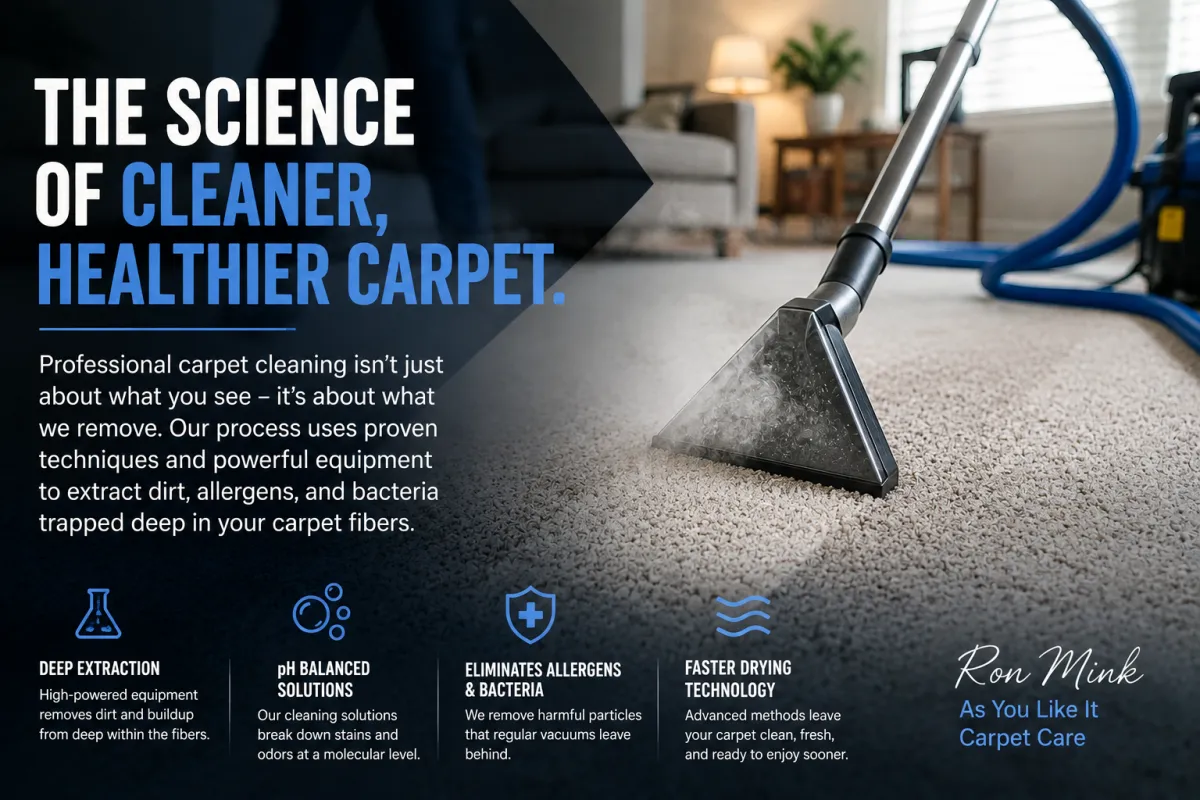
Science Behind Carpet
The Science Behind Professional Carpet Cleaning
Most homeowners think carpet cleaning is simply spraying water and removing dirt. In reality, professional carpet cleaning is a carefully engineered process based on chemistry, physics, and years of industry research. Understanding the science behind the process explains why professional cleaning delivers results that ordinary rental machines simply can't match.
It Starts With Dry Soil Removal
Believe it or not, much of the dirt in your carpet is dry particulate matter. Fine sand, dust, pollen, pet dander, and microscopic debris settle deep into the carpet pile where they act like tiny pieces of sandpaper. Professional cleaning always begins with thorough vacuuming because removing dry soil first allows the rest of the cleaning process to work far more effectively.
Cleaning Solutions Break the Bond
Many stains don't simply sit on top of carpet fibers—they chemically bond to oils, grease, and residue. Professional pre-conditioning solutions are designed to loosen these bonds through surfactants that surround and suspend soil particles. After allowing the solution time to work, those contaminants become much easier to remove during extraction. Industry standards emphasize proper dwell time so cleaning agents can fully suspend embedded soils before extraction begins.
Hot Water Extraction Does the Heavy Lifting
Often called "steam cleaning," professional hot water extraction actually uses heated, pressurized water—not live steam. The rinse solution penetrates deep into the carpet while powerful vacuum systems immediately extract the water along with suspended dirt, allergens, bacteria, and cleaning residues. The goal isn't simply to make carpets look cleaner—it's to leave them cleaner from deep within the fibers.
Fast Drying Protects Your Carpet
Proper extraction is just as important as the cleaning itself. Removing as much moisture as possible helps carpets dry faster, reduces the chance of odors, prevents soil from wicking back to the surface, and minimizes moisture-related issues—especially in Houston's humid climate. Professional standards emphasize rapid drying through strong extraction and proper airflow.
Science Creates Longer-Lasting Results
Professional carpet cleaning isn't about masking dirt—it's about removing it. By combining the right chemistry, proper water temperature, controlled pressure, and powerful extraction, professional cleaning restores carpet appearance, improves indoor air quality, and helps extend the life of your flooring. That's why homeowners who invest in quality carpet care often enjoy cleaner, healthier carpets that stay beautiful much longer.
